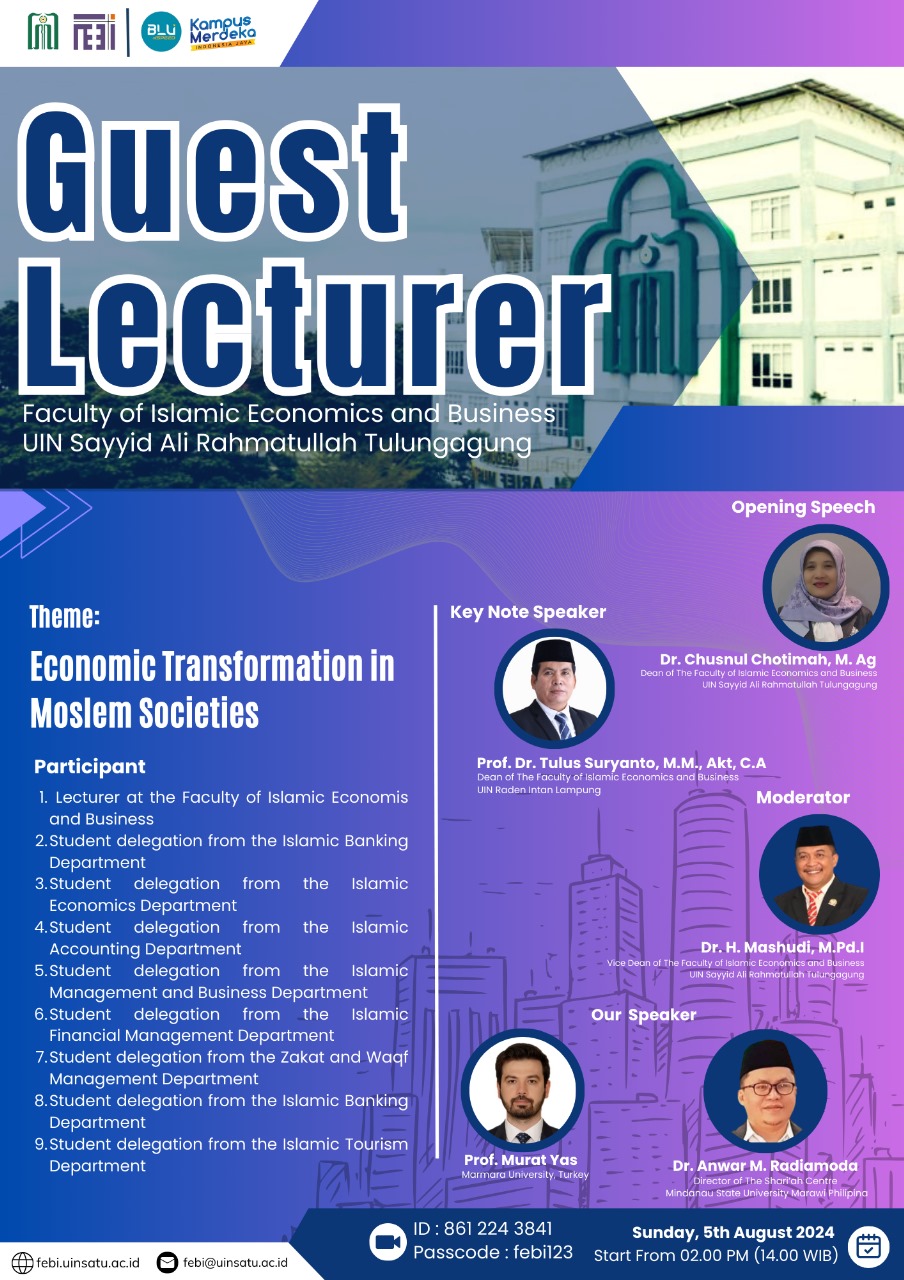
 Second Speaker is Mr. Anwar M. Radiamoda, Ph.D from Mindanau State University Marawi Philipina. He describes the role of Islamic economics in increasing competitiveness and tells about the relationship between Sharia to increase economic aspects and Islamic economics in improving competitiveness. We know that the Muslims in the Philippines are a minority, they are scattered in the Philipines, and most of them are living in Mindanao. The foundation of the Islamic economic system is the theoretical construct of an economy whose members follow the Islamic faith. In other words, the core of Islamic economics rests on a theological foundation – social welfare is valued above material gain and heavy emphasis is placed on a strong belief in and faithful obedience to Allah. Islamic economics is one of the main pillars of the new community in the city of Madina Al-Munawwarah.
 In addition, Mr. Anwar explains basic concepts in the creation of humankind. There are three concepts humanity, cooperation and coordination, and mutual consultation. Next, sharia is being applied to ending poverty. There are six concepts namely it is a code of law based on Al Qur’an and Sunnah, it preserves humankind, protects human rights, it teaches the system of financing, it promotes the public welfare, it has penal law according to the situations, and radicalism has no legitimacy in sharia. Mr. Anwar also explains about core universal interests (Maqosid Sharia) such as honor, family, life, religion, and reason. Lastly, he explains that the aim of Islam Economics that the aim of Islamic economics is for moral development, promoting unity, social justice, faith, equitable distribution, circulation of wealth, and providing basic human needs three basic principles of Islamic economy are multifaceted ownership, economic freedom within a certain limit, and social justice. (Sani)
